10. TALKING WITH PICTURES
10. TALKING WITH PICTURES
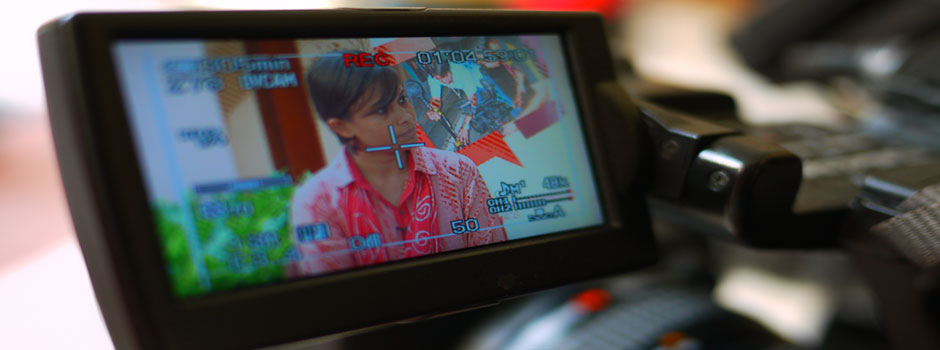
When reporting, the cameraman-journalist shoots according to what he sees on the field and to his style. It uses the language of the pictures to play on meanings resulting from: the camera choice, the angle, the framing, the light, the moves and the positioning with regards to the package’s topic.
SHOTS MEANING
Every time the cameraman starts his camera, films and stops, he’s making a shot. The shots filmed in a same place or around the event are called a sequence, a family of shots that must be varied.
- The long shot helps define the general context.
- The extreme long shot locates the characters.
- Le medium long shot shows the characters in action.
- The close shot shows one or various characters in situ.
- The close up is a TV classic, it appeals to the way we see others naturally.
- The extreme close-up on a body detail or a precise act.
- The insert focuses the attention on a visual clue linked to the action being described.
SHOOTING STYLES AND THEIR EFFECT.
- The opener :
A character or an object peak out from one side of the frame, which accentuates the depth.
- High angle and low angle shots :
The camera lens is looking up or looking down, which suggest dominance either of the viewer or the viewee.
- The sequence shot :
The camera doesn’t cut : the sequence is one long take. Without any interruption the camera follows the description of a location or the on-going action.
- Subjective camera :
The image becomes the sight of somebody involved in the action. It gives the viewer the impression of being right in on the action.
CAMERA MOVES.
- Pan shots :
The camera pivots on its axis, to show a context, to locate an event.
- Tracking shots :
The camera moves and follows a continuous trajectory, oftentimes parallel to the character, the object it’s filming. In reporting, tracking shots are filmed from a car, a train… They might indicate a process, a story, or an evolution.
MOVES AND OPTICAL EFFECTS.
- Zooming :
Objects standing afar are brought closer. For a package, the best way to zoom in is by getting closer to what you’re filming.
- Blurry/clear :
The cameraman makes a foreground element go from blurry to clear, or the reverse. It’s an effect that marks a transition with no clear cut.

Comments
Post a Comment